
Study in Ireland with Expert Education Counsellors
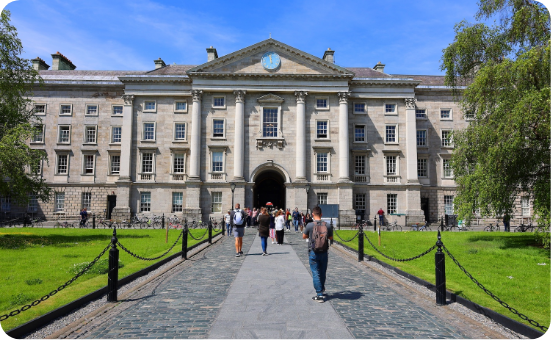
Why Study in Ireland?
Globally Ranked Universities
Study in Ireland at world-renowned universities recognised for academic excellence and research.
Best Market for Tech and Business
Ireland is home to many leading global companies and a thriving tech and business ecosystem.
Post-Study Work Visa Options
After you study in Ireland, eligible graduates can stay and work with post-study work visa options.
Study in Ireland for International Students
Ireland is one of Europe’s leading study destinations for international students, offering internationally recognised qualifications, English-language education, innovative universities and strong links with global employers.
Whether you are considering an undergraduate degree, postgraduate programme or master’s degree, Ireland offers a wide range of courses across technology, business, engineering, healthcare, science, finance and many other disciplines.
StudyFynder helps international students explore universities and courses in Ireland, understand entry requirements, prepare applications and access guidance on scholarships and the student visa process.
From choosing the right course to preparing for life in Ireland, our education counsellors can help you make informed decisions throughout your study abroad journey.
Why Study in Ireland?
International students choose Ireland for several reasons:
- Internationally recognised qualifications: Irish degrees and postgraduate qualifications are recognised by employers and institutions around the world.
- English-speaking education: Ireland provides the opportunity to study in English while living in a European country.
- Wide choice of courses: Students can choose from programmes in technology, computer science, AI, data science, business, engineering, healthcare, pharmaceuticals, finance and many other areas.
- Strong industry connections: Ireland is home to operations of many international companies across technology, pharmaceuticals, financial services, life sciences and other industries.
- Work opportunities while studying: Eligible non-EEA students holding Stamp 2 permission can work up to 20 hours per week during term time and up to 40 hours per week during specified holiday periods.
- Post-study opportunities: Eligible graduates may be able to remain in Ireland after completing their studies through Ireland’s Third Level Graduate Programme.
- International student community: Ireland welcomes students from Europe, India, Asia, Africa, the Middle East and many other regions.
For students looking for a combination of academic quality, career opportunities and international experience, Ireland can be an attractive destination.
Top Universities in Ireland
Ireland has a diverse higher education system that includes universities, technological universities, institutes and specialist colleges.
Some of Ireland’s best-known higher education institutions include:
- Trinity College Dublin (TCD):Located in the centre of Dublin, Trinity College Dublin offers undergraduate and postgraduate programmes across disciplines including business, engineering, computer science, humanities, health sciences and natural sciences.
- University College Dublin (UCD): UCD is one of Ireland’s largest universities and offers an extensive range of undergraduate, postgraduate and research programmes to Irish and international students.
- University College Cork (UCC): Based in Cork, UCC offers programmes across business, science, engineering, medicine, computing, humanities and other disciplines.
- University of Galway: Located on Ireland’s west coast, the University of Galway offers programmes across areas including engineering, business, science, healthcare, computing and the humanities.
- University of Limerick (UL): UL is known for its strong connections with industry and offers programmes in business, engineering, technology, science, health, education and other fields.
- Dublin City University (DCU): DCU offers career-focused undergraduate and postgraduate programmes across computing, engineering, business, science, communications, humanities and education.
- Maynooth University:Located close to Dublin, Maynooth University provides undergraduate and postgraduate programmes across science, technology, business, social sciences and humanities.
Ireland also has technological universities and specialist institutions offering programmes designed around practical skills, research and industry requirements.
StudyFynder can help students compare suitable universities and programmes based on their qualifications, interests, budget and career ambitions.
Popular Courses to Study in Ireland
- Computer Science and Information Technology:Courses include computer science, software engineering, cloud computing, cybersecurity, artificial intelligence and information systems.
- Data Science and Artificial Intelligence: Ireland’s growing technology sector makes AI, machine learning, analytics and data science attractive options for international students.
- Business and Management: Popular areas include international business, management, marketing, entrepreneurship, supply chain management and human resources.
- Finance and Accounting: Students can explore programmes in finance, accounting, financial technology, economics and investment.
- Engineering: Options include mechanical, electronic, electrical, civil, biomedical and computer engineering.
- Pharmaceutical and Life Sciences:Ireland has a significant pharmaceutical and life sciences sector, making biotechnology, pharmaceutical science, biopharmaceuticals and related subjects popular choices.
- Healthcare and Nursing:Students can explore nursing, public health, healthcare management and other health-related programmes, subject to individual programme entry and professional requirements.
- Master’s Degrees:Ireland offers a wide range of postgraduate programmes, including specialised one-year master’s degrees in many disciplines.
The right course depends on your academic background, interests, career plans, budget and preferred university. StudyFynder counsellors can help you identify courses that match your individual profile.
Entry Requirements for International Students
Entry requirements to study in Ireland vary depending on the university, programme and level of study.
For an undergraduate programme, applicants will generally need to have successfully completed secondary education and meet the academic requirements for their chosen course.
For a postgraduate or master’s programme, applicants will normally require a recognised bachelor’s degree. Some programmes may require a particular degree classification, relevant subjects or professional experience.
Students may be asked to provide:
- Academic transcripts and certificates
- Passport or identification
- Proof of English-language proficiency
- Statement of Purpose or personal statement
- CV or résumé for certain postgraduate programmes
- Academic or professional references
- Portfolio for selected creative programmes
- Evidence of relevant professional experience where required
Admission requirements vary significantly between courses. Students should always check the specific requirements of their chosen institution and programme before applying.
Student Visa Requirements
International students whose previous education was not completed through English may need to demonstrate their English-language ability.
Irish higher education institutions determine their own English-language admission requirements. Depending on the university and programme, accepted evidence may include examinations such as IELTS, TOEFL, PTE Academic or other recognised qualifications.
The required score can differ considerably between institutions and courses. Programmes in areas such as healthcare, teaching or other regulated professions may have additional requirements.
Some universities may also provide alternative ways of demonstrating English proficiency, depending on the applicant’s previous education and individual circumstances.
StudyFynder can help you check the current English-language requirements for the courses and universities you are considering.
Cost of Studying in Ireland
Tuition fees for international students in Ireland depend on the institution, programme, subject and level of study.
For 2025/26 non-EU undergraduate students, official Education in Ireland guidance lists indicative annual tuition ranges including:
- Business: €10,300–€29,000
- Engineering: €14,500–€28,500
- Science & Technology: €14,500–€28,500
- Arts & Humanities: €13,500–€28,200
- Medicine & Health Sciences: €50,135–€62,500
For 2025/26 non-EU postgraduate students, indicative ranges include:
- Business: €14,000–€40,000
- Engineering: €15,000–€30,000
- Science & Technology: €15,000–€31,000
- Arts & Humanities: €12,000–€23,000
- Medicine & Health Sciences: €11,000–€30,000
These figures are indicative rather than fixed. Fees can change each academic year and vary considerably by institution and programme, so students should always confirm current tuition fees with their chosen university or college before applying.
Cost of Living in Ireland
Typical expenses can include:
- Accommodation and utilities
- Food and groceries
- Public transport
- Mobile phone and internet
- Health insurance
- Books and study materials
- Clothing
- Entertainment and social activities
- Personal expenses
For immigration purposes, current Irish rules require relevant students on courses lasting more than eight months to demonstrate access to at least €10,000 to support themselves, in addition to course fees. This is an immigration financial threshold and should not be treated as a guarantee of the actual amount a student will spend.
Your real living costs may be higher depending on your location and circumstances.
Scholarships in Ireland for International Students
Funding opportunities may be available from:
- Irish universities and higher education institutions
- Government-backed programmes
- Individual academic departments
- Research programmes
- External organisations
Some awards contribute towards tuition fees, while others may provide more extensive financial support.
Scholarships can be competitive, so students should research opportunities and application deadlines well in advance.
StudyFynder can help you explore relevant scholarship opportunities associated with the universities and courses you are considering.
Ireland Student Visa Requirements
For international students who require an Irish study visa, documentation may include:
- A valid passport
- Letter of acceptance from an eligible education provider
- Evidence relating to payment of tuition fees
- Evidence of sufficient finances
- Proof of English-language ability where applicable
- Private medical insurance
- Academic documents
- Additional documents required by Irish immigration authorities
Students should check both their course eligibility and the latest immigration requirements before making financial commitments.
StudyFynder can provide guidance on the application process and documentation; however, visa decisions are made solely by the relevant Irish immigration authorities.
Can International Students Work While Studying in Ireland?
Yes, eligible international students can work while studying in Ireland.
Non-EEA students registered on Stamp 2 can currently work for up to 20 hours per week during term time without an employment permit.
Eligible Stamp 2 students can work for up to 40 hours per week during the designated vacation periods, currently June, July, August and September and from 15 December to 15 January.
Students should not rely on part-time employment as their primary way of funding their studies. Irish immigration requirements state that students must demonstrate sufficient finances to support themselves without relying on casual employment.
Employment rights depend on your immigration permission, so always check the conditions attached to your individual permission.
Post-Study Work Opportunities in Ireland
Ireland provides eligible non-EEA graduates with an opportunity to remain in the country after completing qualifying higher education through the Third Level Graduate Programme.
Eligible graduates with a Level 8 qualification on Ireland’s National Framework of Qualifications may receive up to 12 months of graduate immigration permission, subject to the programme’s conditions.
Eligible graduates with a Level 9 qualification or above may receive up to 24 months, normally with an initial 12-month permission followed by a further 12 months subject to meeting the applicable conditions.
Qualifying graduates generally receive Stamp 1G, which allows them to seek graduate-level employment. Stamp 1G holders under the graduate programme can work full-time in accordance with employment law but cannot operate a business or be self-employed.
The programme is intended to provide eligible graduates with time to seek suitable employment and potentially transition to an employment permit, such as a General Employment Permit or Critical Skills Employment Permit, where applicable.
Eligibility and immigration rules can change, so students should check the latest requirements with Immigration Service Delivery.
Intakes and Application Deadlines
Some institutions also offer a January/Spring intake for selected courses.
Application deadlines vary significantly depending on the institution, course and applicant type. Competitive programmes may close earlier, while some courses may continue accepting applications while places remain available.
International students should start planning well in advance to allow enough time for:
- Researching courses and universities
- Preparing academic documents
- Taking an English-language test if required
- Preparing a Statement of Purpose
- Obtaining references
- Applying for scholarships
- Receiving and accepting an offer
- Paying required fees
- Arranging finances
- Completing the visa process where required
- Finding accommodation
Starting early can provide a wider choice of courses and more time to complete each stage of the process.
How to Apply to Study in Ireland
Applying to study in Ireland becomes easier when you approach it step by step.
-
Step 1: Choose your subject and study level
Decide whether you are looking for an undergraduate, postgraduate, master's or other programme and identify the subjects that support your career goals. -
Step 2: Research universities and courses
Compare programme content, entry requirements, tuition fees, location, career opportunities and other factors. -
Step 3: Check your eligibility
Review academic and English-language requirements to determine whether your profile meets the programme criteria. -
Step 4: Prepare your documents
Gather your academic transcripts, certificates, passport, English-language results, Statement of Purpose, references and other required documentation. -
Step 5: Submit your university application
Complete the appropriate application process and ensure your information and supporting documentation are accurate. -
Step 6: Review your offer
If successful, carefully check your offer letter, conditions, tuition fees and acceptance requirements. -
Step 7: Explore scholarships and funding
Research available scholarships and prepare your finances for tuition and living expenses. -
Step 8: Prepare your visa application
If you require a student visa, check the latest Irish immigration requirements and prepare the necessary documentation. -
Step 9: Arrange accommodation and travel
Begin your accommodation search early and prepare for your move to Ireland.
StudyFynder can support you throughout these stages, helping you understand your options and navigate the application journey.
Top Universities to Study in Ireland
Admission Requirements
Academic transcripts
Submit your previous academic records and transcripts.
English proficiency (IELTS/TOEFL)
Provide valid English language test scores as per university requirement.
Statement of Purpose
A well-written SOP outlining your academic background, goals, and study plans.
Cost of Studying in Ireland
How much does it cost to study in Ireland?
International students should budget for tuition fees plus accommodation, food, transport, insurance and other living expenses. Tuition varies considerably depending on the university and course, with programmes such as medicine generally costing substantially more than arts, business or technology courses.
Tuition Fees
(per year)
-
- Undergraduate€12,000 - €25,000
-
- Postgraduate€12,000 - €35,000
Living Expenses
(per year)
Accommodation, Food & Transport, Miscellaneous (€10,000 – €12,000)
Costs may vary depending on the university, course and lifestyle.
Your future starts in Ireland.
Discover world-class education, career opportunities, and a vibrant culture that shapes your future.
Frequently Asked Questions About Studying in Ireland
Is Ireland a good place for international students?
Ireland is a popular destination for international students because it offers English-language education, internationally recognised qualifications, a wide range of courses and post-study opportunities for eligible graduates.
How much does it cost to study in Ireland?
Tuition fees depend on your course and institution. For 2025/26, indicative non-EU undergraduate tuition ranges from around €10,300 for some programmes to more than €60,000 for certain medicine and health sciences programmes. Postgraduate fees also vary considerably by discipline and institution.
What are the best universities in Ireland for international students?
Ireland’s well-known institutions include Trinity College Dublin, University College Dublin, University College Cork, University of Galway, University of Limerick, Dublin City University and Maynooth University, alongside technological universities and specialist institutions. The best choice depends on your course, academic profile, budget and career goals.
What are the most popular courses to study in Ireland?
Popular areas include computer science, artificial intelligence, data science, cybersecurity, business, finance, engineering, pharmaceuticals, biotechnology, healthcare and other technology and science-related subjects.
What qualifications do I need to study in Ireland?
Requirements depend on the course and institution. Undergraduate applicants generally need recognised secondary-school qualifications, while postgraduate applicants usually require an appropriate bachelor’s degree. Individual programmes may have additional requirements.
Do I need IELTS to study in Ireland?
Not necessarily. Universities determine their own English-language requirements and may accept IELTS, TOEFL, PTE Academic or other forms of evidence. Students should check the requirements of their chosen programme.
Can I study in Ireland without IELTS?
It may be possible for some students, depending on the university, programme, previous education and alternative English-language evidence accepted by the institution. This should be confirmed directly for the individual course.
Can international students work in Ireland?
Eligible non-EEA students with Stamp 2 permission can currently work up to 20 hours per week during term time and up to 40 hours during designated vacation periods.
Can I stay in Ireland after graduating?
Eligible non-EEA graduates may qualify for Ireland’s Third Level Graduate Programme. Level 8 graduates may receive up to 12 months, while eligible Level 9 or higher graduates may receive up to 24 months, subject to the programme’s conditions.
What is Stamp 1G in Ireland?
Stamp 1G is an immigration permission that can allow eligible graduates to remain in Ireland under the Third Level Graduate Programme to seek graduate-level employment. Eligible graduate Stamp 1G holders can work full-time subject to the applicable conditions.
Are scholarships available for international students in Ireland?
Yes. Scholarships may be offered by universities, government-backed programmes and other organisations. Eligibility, funding amounts and deadlines vary, so students should research scholarships early.
How much money do I need to live in Ireland as a student?
Actual living expenses depend on location and lifestyle. For relevant immigration purposes, students on courses lasting more than eight months currently need to demonstrate access to at least €10,000, separate from course fees. Actual living costs can be higher.
What is the main intake for universities in Ireland?
September/Autumn is generally the main intake. Some institutions also offer selected courses beginning in January or at other points during the academic year.
When should I apply to study in Ireland?
International students should begin researching and preparing applications well in advance of their intended intake. Deadlines vary by university and programme, and additional time may be required for scholarships, visas and accommodation.
How do I apply to study in Ireland?
Start by selecting a course and university, checking the academic and English-language requirements and preparing your documents. You can then submit the appropriate university application, respond to any offer, arrange funding and complete the visa process if required.
Can international students work after a master's degree in Ireland?
Eligible graduates of qualifying Level 9 programmes may be able to remain in Ireland for up to 24 months under the Third Level Graduate Programme, subject to meeting its conditions.
Is Ireland good for computer science and technology students?
Ireland offers a broad selection of computer science, software, data, cybersecurity and AI-related programmes. Students should compare programme content, industry connections, graduate outcomes and entry requirements when choosing a course.
Can StudyFynder help me choose a university in Ireland?
Yes. StudyFynder can help you explore universities and courses based on your academic profile, preferred subject, budget and career goals.
Can StudyFynder help with an Ireland student visa?
StudyFynder can provide guidance on the student visa process and help students understand documentation requirements. Visa applications and final decisions remain the responsibility of the relevant Irish immigration authorities.
Can StudyFynder help me find scholarships in Ireland?
StudyFynder can help students identify relevant scholarship opportunities associated with their chosen universities and programmes and understand the applicable eligibility and application requirements.
How can Indian students study in Ireland?
Indian students can research suitable Irish courses and institutions, check academic and English-language requirements, apply to their chosen programme and, after receiving an eligible offer, complete the required financial and student visa processes. StudyFynder can help students from India explore suitable universities, courses and application options.