
Study in the UK for International Students
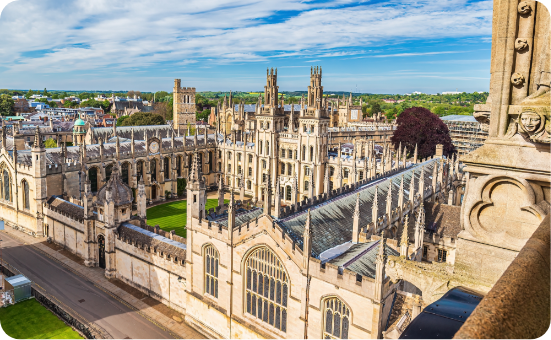
Looking to Study in the UK with Expert Education Counsellors
The United Kingdom is one of the world’s leading destinations for international students, offering globally recognised universities, a wide range of undergraduate and postgraduate courses, and opportunities to gain valuable international experience.
Whether you’re planning to study for a bachelor’s degree, master’s programme or specialist qualification, StudyFynder can help you explore UK universities, compare courses and understand tuition fees, scholarships, entry requirements and the Student visa process.Our study abroad consultants and education counsellors can help you make informed decisions at every stage of your journey to study in the UK.
Why Study in the UK with StudyFynder?
Benefits of studying in the UK include:
Globally recognised
qualifications
UK university qualifications are recognised by employers and organisations around the world.
Wide choice of universities and courses
Students can choose from thousands of undergraduate, postgraduate and specialist programmes.
One-year master's programmes
Many UK master’s degrees can be completed in one year, allowing students to obtain a postgraduate qualification faster than in countries where similar programmes typically take longer.
International student community
UK universities attract students from many different countries and cultural backgrounds.
Career opportunities
Studying in the UK can provide access to career development, professional networks, placements and graduate opportunities.
Post-study options
Eligible international graduates may be able to remain in the UK temporarily after completing their studies through the Graduate visa route.
Globally Ranked Universities
Study in the UK at world-renowned universities recognised for academic excellence and research.
Best Market in Tech and Business
Ireland is home leading global companies and a thriving tech and business ecosystem.
Post-Study Work Visa Options
Eligible graduates can stay and work in Ireland with post-study work visa options.
UK Universities for International Students
StudyFynder can help you explore UK universities and identify institutions and courses that match your academic background and study goals.
When comparing UK universities, international students should consider:
- Course content and modules
- University entry requirements
- Tuition fees
- Scholarships and funding
- University location
- Accommodation costs
- Graduate employment opportunities
- Industry connections
- Placement opportunities
- Campus facilities
- Student support services
Rather than choosing a university based on reputation alone, consider which university and course best match your academic qualifications, budget and future career plans.
Popular Courses to Study in the UK
- Computer Science and Artificial Intelligence: Study areas can include computer science, artificial intelligence, machine learning, software engineering, cloud computing and related technologies.
- Data Science and Analytics: Students interested in data-driven careers can explore programmes covering data science, business analytics, statistics, data engineering and artificial intelligence.
- Business and Management: Popular programmes include business management, international business, entrepreneurship, project management and supply chain management.
- Finance and Accounting: Students can study finance, accounting, financial technology, economics, investment management and related subjects.
- EngineeringUK universities offer programmes across mechanical, civil, electrical, electronic, chemical, aerospace and other engineering disciplines.
- Cybersecurity: Cybersecurity courses can prepare students for careers in areas such as information security, network security, cyber risk and digital forensics.
- Healthcare and Nursing: Students interested in healthcare can explore nursing, public health, healthcare management and other health-related programmes, subject to individual course and professional requirements.
- Law: UK universities offer undergraduate and postgraduate programmes covering areas including commercial law, international law, corporate law and human rights law.
- Life Sciences and Biotechnology: Students can explore programmes in biotechnology, biomedical science, pharmaceutical science, genetics and related disciplines.
- Marketing: Marketing programmes can include digital marketing, international marketing, consumer behaviour, branding and marketing analytics.
Not sure which course is right for you? StudyFynder can help you compare courses based on your qualifications, interests and career goals.
Admissions Requirements
Entry Requirements for International Students
For undergraduate programmes, universities typically assess your secondary-school qualifications and academic performance.
For postgraduate programmes, applicants will normally need a recognised bachelor’s degree or equivalent qualification. Some specialist programmes may also require relevant professional or academic experience.
Depending on the course, applicants may be asked to provide:
- Academic transcripts
- Degree or school certificates
- English-language test results
- Personal statement
- Statement of Purpose
- Academic or professional references
- CV or résumé
- Portfolio
- Evidence of relevant work experience
Always check the requirements for the individual university and course before applying.
English Language Requirements for UK Universities
Universities may accept tests such as IELTS and other recognised English-language qualifications, depending on their individual admissions policies.
The required score varies by university and course. Some programmes may require higher English-language scores, particularly where strong written or verbal communication is essential.
In some circumstances, universities may accept alternative evidence of English proficiency.
Can You Study in the UK Without IELTS?
StudyFynder can help students understand the specific English-language requirements for the courses they are considering.
Cost of Studying in the UK for International Students
There isn’t one standard tuition fee for international students. Fees vary significantly depending on:
- University
- Course
- Undergraduate or postgraduate level
- Programme duration
- Subject
- Location
Students should always check the current international tuition fee directly with the university before applying.
StudyFynder can help you compare universities and courses based on your academic goals and available budget.
Cost of Living in the UK for International Students
Typical expenses can include:
- Accommodation
- Food and groceries
- Local transport
- Electricity and utilities
- Mobile phone and internet
- Study materials
- Clothing
- Entertainment
- Personal expenses
Students should create a realistic budget covering both tuition fees and living expenses before accepting a university offer.
For Student visa purposes, the UK Government has separate financial requirements. These should not be confused with your actual personal living budget, which may be higher or lower depending on your circumstances.
Scholarships in the UK for International Students
Scholarships can be offered by:
- UK universities
- Government programmes
- International organisations
- Charities and foundations
- External scholarship providers
Some awards cover part of the tuition fee, while others may provide more substantial financial support.
Because scholarship eligibility and deadlines vary considerably, students should begin researching funding opportunities as early as possible.
StudyFynder can help you explore universities, courses and available scholarship opportunities as part of your study-abroad planning.
UK Student Visa Requirements for International Students
Many international students planning to study in the UK will require a Student visa.
To qualify for a UK Student visa, applicants generally need to have been offered a place on a course by a licensed student sponsor, demonstrate the required level of English and meet applicable financial requirements.
Your university or education provider will issue a Confirmation of Acceptance for Studies (CAS) when the appropriate requirements have been met.
Documents required can depend on your circumstances, but applicants generally need a valid passport or other accepted travel documentation and their CAS. Additional evidence may include proof of funds, an ATAS certificate for certain courses and nationalities, or tuberculosis test results where applicable.
Visa requirements can change, so students should always check the latest official UK Government guidance before applying.
How Much Money Do I Need for a UK Student Visa?
| Study Location | Maintenance Requirement |
|---|---|
| Studying in London | £1,529 per month for up to nine months |
| Studying outside London | £1,171 per month for up to nine months |
These figures relate specifically to visa financial requirements and should not be treated as a complete estimate of the actual cost of living in the UK.
Always check the latest UK Government requirements before submitting a visa application.
Can International Students Work While Studying in the UK?
Many international students ask whether they can work while completing their studies.
Work rights depend on the conditions attached to the student’s visa and the type and level of course.
Under the stated current rules, students on certain full-time degree-level courses sponsored by eligible higher education providers can generally work up to 20 hours per week during term time and full-time during permitted vacation periods.
Different restrictions can apply to other courses and circumstances.
Students should check the conditions of their visa before accepting employment.
Post-Study Work Opportunities in the UK
One important option is the Graduate visa.
Eligible graduates can use the Graduate route to remain in the UK after successfully completing an eligible UK course.
Under the stated UK Government rules:
- Eligible applicants applying on or before 31 December 2026 can receive a 2-year Graduate visa.
- Eligible non-doctoral applicants applying on or after 1 January 2027 can receive an 18-month Graduate visa.
- Eligible graduates with a PhD or other doctoral qualification can receive 3 years.
The Graduate visa cannot itself be extended, although eligible graduates may later be able to switch to another immigration route, such as the Skilled Worker visa.
Because immigration rules can change, always check the latest official UK Government guidance.
UK University Intakes for International Students
UK universities can offer several admission periods throughout the year, although availability depends on the institution and course.
-
September Intake
September is the main university intake in the UK and generally offers the widest selection of universities and courses. Students planning to begin in September should research universities and prepare their applications well in advance. -
January Intake
Many universities also offer selected courses starting in January. The January intake can provide an alternative for students who missed September entry or require additional time to complete their application, finances or other preparations. -
Other Intakes
Some universities and courses may offer additional start dates during the year. Course availability can be more limited outside the main September intake, so always check directly with the relevant university.
Study in the UK from India
Indian students interested in studying in the UK should consider:
- Academic entry requirements
- English-language requirements
- Tuition fees
- Scholarships
- Living expenses
- Student visa requirements
- University location
- Graduate career opportunities
StudyFynder can help students from India research UK universities, compare courses and understand the university application process.
Best Cities to Study in the UK
-
London
London offers a large concentration of universities, international businesses, cultural attractions and professional opportunities. Students should, however, budget carefully because living and accommodation costs can be comparatively high. -
Manchester
Manchester is a major student city with universities, technology companies, cultural attractions and a large international community. -
Birmingham
As one of the UK's largest cities, Birmingham offers a range of universities and access to employers across sectors including business, engineering, technology and professional services. -
Edinburgh
Scotland's capital combines internationally recognised higher education with a strong cultural, financial and technology environment. -
Glasgow
Glasgow is another major Scottish university city with a large student population and a wide range of academic options. -
Cardiff
The Welsh capital provides students with access to universities, cultural attractions and a growing business environment. -
Coventry
Coventry is home to a significant international student population and is well connected to Birmingham and other parts of England.
Other popular university destinations include Leeds, Liverpool, Nottingham, Sheffield, Newcastle and Bristol.
How to Apply to a UK University
A typical international student journey can involve:
-
Decide What You Want to Study :
Consider your academic interests, previous qualifications and career objectives. -
Research UK Universities :
Compare courses, entry requirements, tuition fees, locations and available scholarships. -
Check Your Eligibility:
Review academic and English-language requirements for each course. -
Prepare Your Documents:
Gather academic records, English-language evidence and any additional documents requested by the university. -
Submit Your Application:
Apply through the appropriate university application process. -
Review Your Offer
If successful, carefully review the university's offer and any conditions attached to it. -
Prepare Your Finances
Plan for tuition fees, accommodation, living expenses and applicable visa requirements. -
Apply for Your Student Visa if Required
Once you have the necessary documentation, follow the current UK Government visa application process. -
Prepare for Life in the UK
Arrange accommodation, travel, finances and other practical requirements before departure.
Why Choose StudyFynder to Study in the UK?
We can help you with:
- University selection
- Course selection
- University application guidance
- Entry requirement information
- Scholarship guidance
- Student visa guidance
- Study destination information
- Pre-departure planning
Start exploring your UK study options with StudyFynder today.
Top Universities in the UK


Admission Requirements
Academic transcripts
Submit your previous academic records and transcripts.
English proficiency (IELTS/TOEFL)
Provide valid English language test scores as per university requirement.
Statement of Purpose
A well-written SOP outlining your academic background, goals, and study plans.
Cost of Studying in the UK
Tuition Fees
(per year)
-
- Undergraduate£12,000 - £25,000
-
- Postgraduate£12,000 - £35,000
Living Expenses
(per year)
Accommodation, Food & Transport, Miscellaneous (£10,000 – £12,000)
Estimated Total Annual Cost £20,000 – £40,000
Costs may vary depending on the university, course and lifestyle.
Your future starts in UK.
Discover world-class education, career opportunities, and a vibrant culture that shapes your future.
Frequently Asked Questions About Studying in the UK
Why should international students study in the UK?
The UK offers internationally recognised universities, thousands of courses, diverse student communities and undergraduate and postgraduate study options across many academic disciplines.
What are the requirements to study in the UK?
Requirements depend on the university and course. Students may need relevant academic qualifications, English-language proficiency and supporting documents such as transcripts, references and a personal statement.
How much does it cost to study in the UK?
Costs vary considerably depending on the university, course, level of study, location and lifestyle. Students should consider both tuition fees and living expenses when preparing their budget.
Can I study in the UK without IELTS?
Some universities may accept alternative English-language tests or other evidence of English proficiency. Requirements vary by institution, course and applicant circumstances.
Are scholarships available for international students in the UK?
Yes. Universities and other organisations offer scholarships and funding opportunities for eligible international students. Availability, eligibility and award values vary.
Can international students work while studying in the UK?
Some international students can work while studying, subject to the conditions attached to their immigration permission. Eligible students on certain degree-level courses can generally work up to 20 hours per week during term time.
Can I stay in the UK after graduation?
Eligible students who successfully complete an eligible UK course may be able to apply for a Graduate visa. The duration depends on when the application is made and the qualification completed.
What are the main UK university intakes?
September is the principal intake for most UK universities. Many universities also offer selected courses beginning in January, while some programmes have additional start dates.
Is the UK a good destination for Indian students?
The UK offers Indian students a broad selection of universities, courses and internationally recognised qualifications. Students should compare academic options, costs and career objectives before deciding whether the UK is right for them.
How do I choose a UK university?
Consider the course content, entry requirements, tuition fees, scholarships, location, living costs, facilities, industry connections and career opportunities rather than choosing solely on overall university reputation.
How can StudyFynder help me study in the UK?
StudyFynder can help you explore universities and courses, understand entry requirements, navigate university applications and access guidance on scholarships and the Student visa process.